
Product

The company is committed to the application technology research and development of digital micromirror spatial light modulators and optical engines.

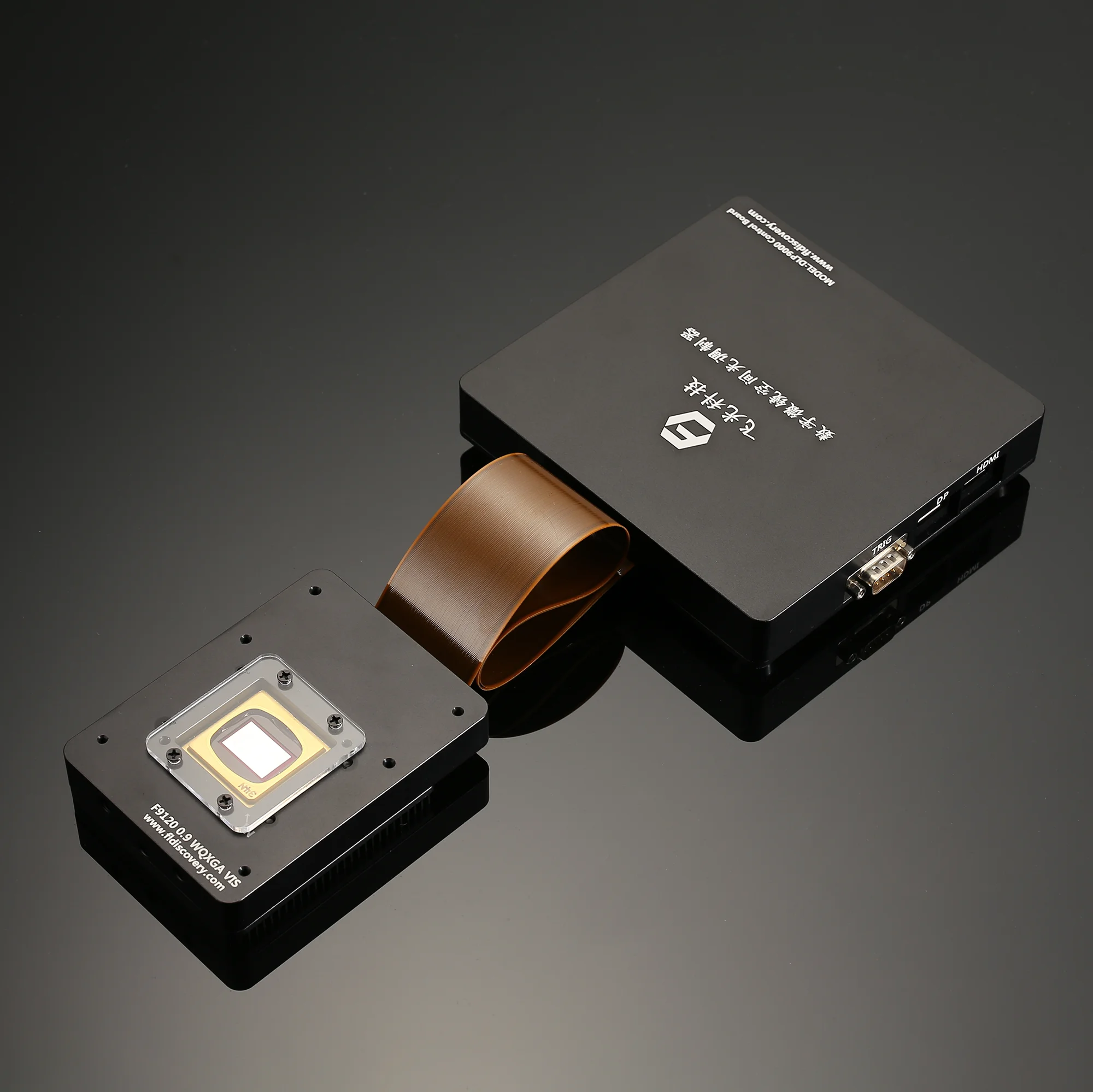
DLP Control Board

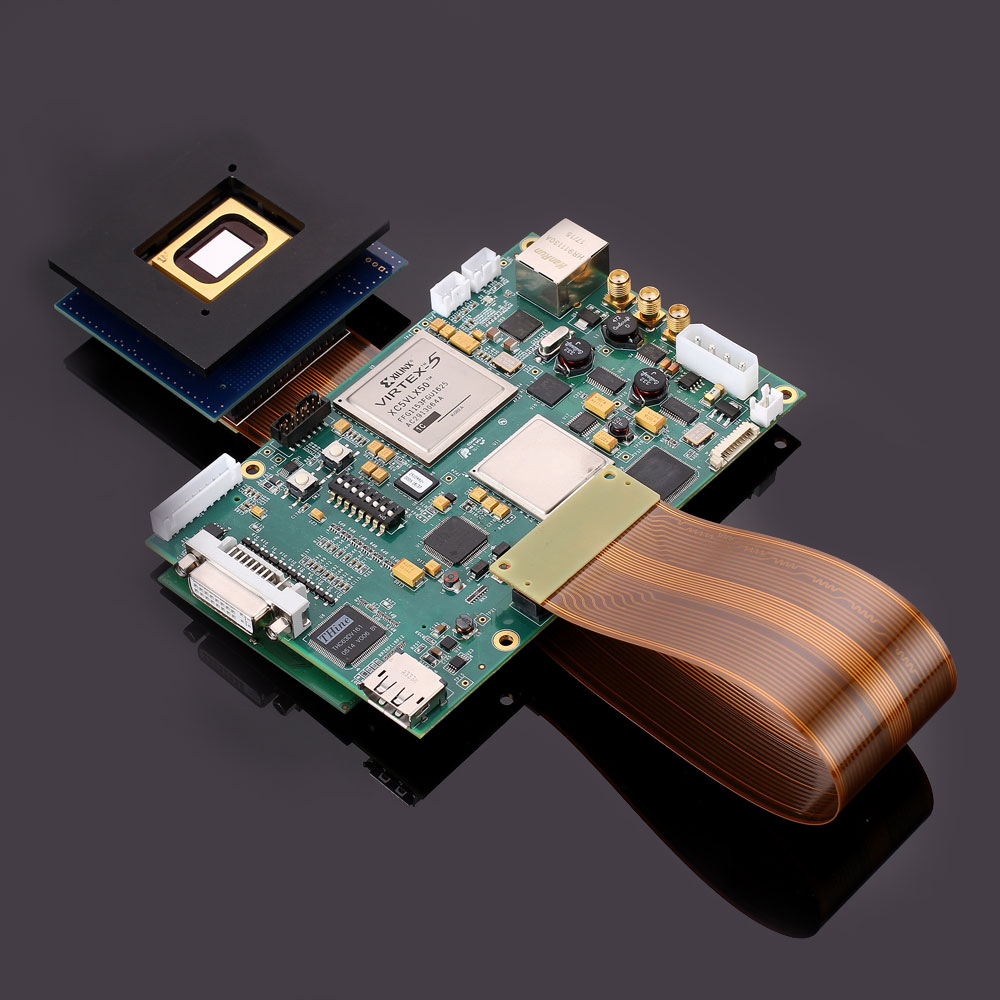
DLP control board adopts TI advanced light control chip, and adopts proven and mature technology. It is designed for industrial and scientific research fields. The biggest difference between DLP and projector is that it can support accurate internal and external synchronization, and can match with the camera. It mainly includes two parts: control and drive, which can generate programmable digital images according to user requirements, thereby meeting application requirements in the fields of machine vision, three-dimensional detection, three-dimensional scanning, computational optics, and information optics.
Optical Mechanical Engine

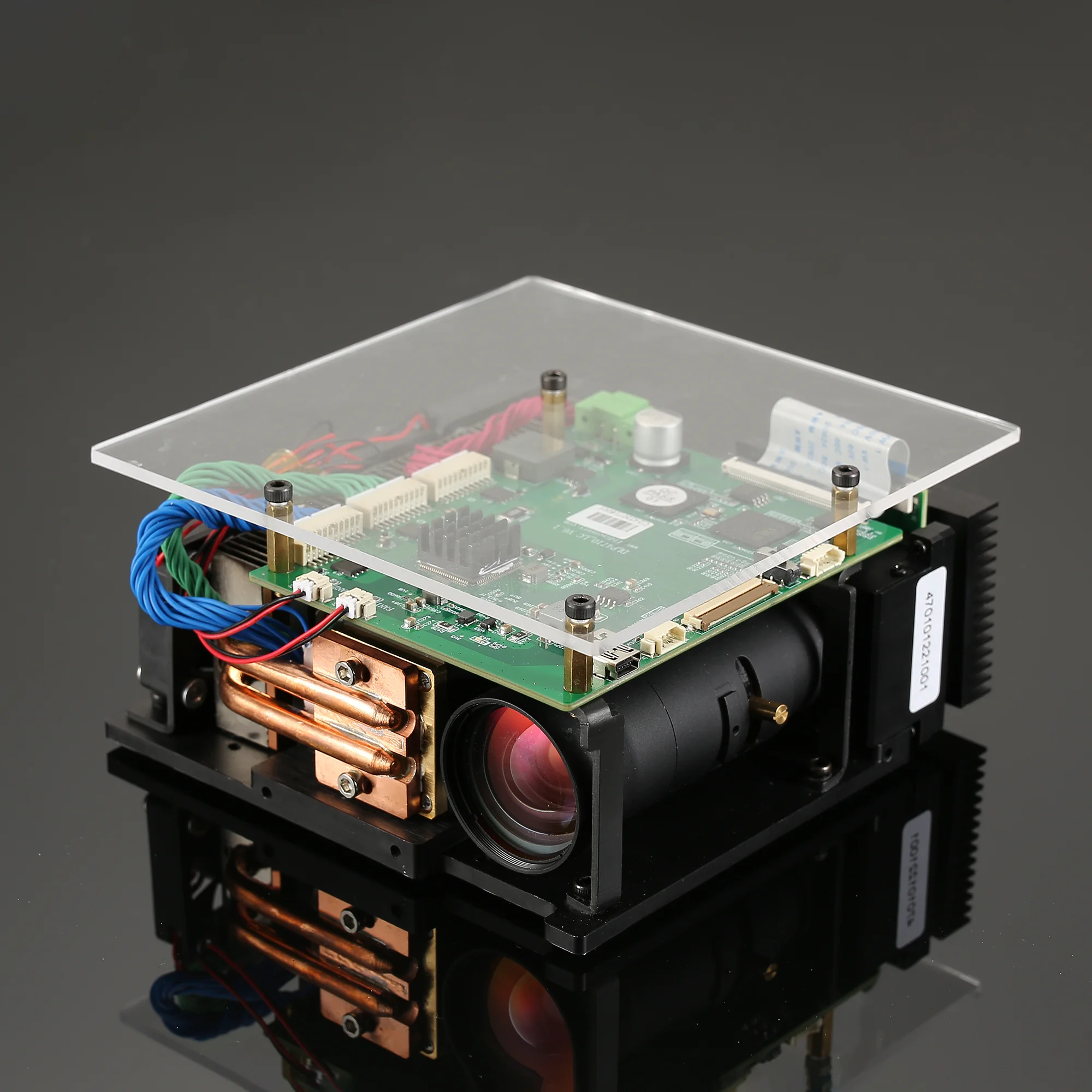
The DLP optical engine includes two parts: electronic control and optical imaging, which can project encoded institutional light according to user needs, thereby meeting application requirements in the fields of machine vision, three-dimensional detection, three-dimensional scanning, computational optics, and information optics. The DLP optical engine uses TI advanced optical control chips, designed for industrial and scientific research. The biggest difference from projectors is that the DLP optical engine supports accurate internal and external synchronization signals, and can closely cooperate with cameras.
Ultra High Resolution Digital Micromirror Spatial Light Modulator

The ultra-high resolution digital micromirror spatial light modulator is designed using the TI low-cost controller DLPC900, which can modulate the amplitude of the input light, thus meeting the application requirements in the fields of computational optics and information optics. Ultra high definition digital micromirror spatial light modulator uses TI advanced light control chips, designed for industrial and scientific research fields, supporting accurate internal and external synchronization signals, and being able to closely cooperate with cameras. This series of products can save image data when powered down, with high cost performance.

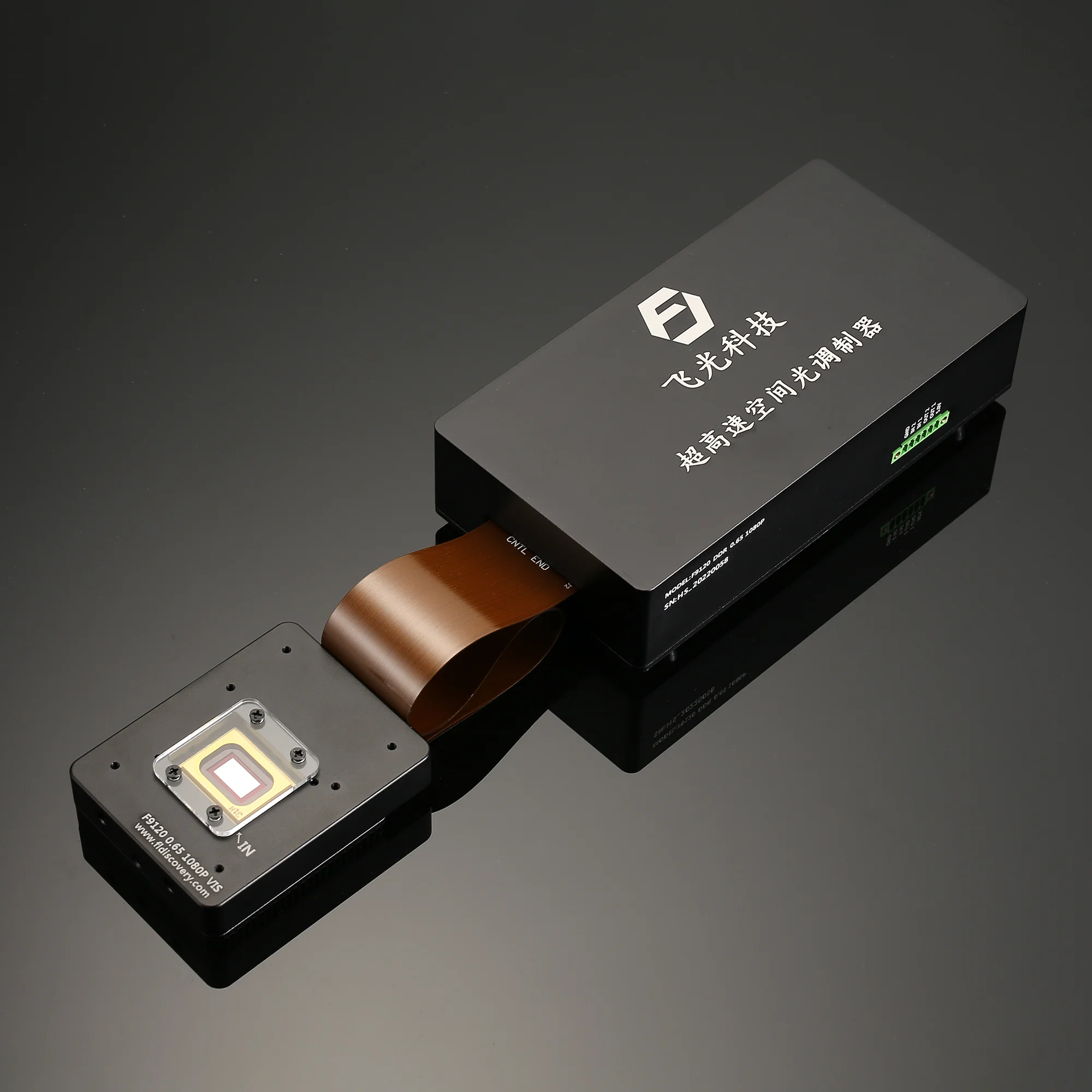
Ultra High Speed Digital Micromirror Spatial Light Modulator

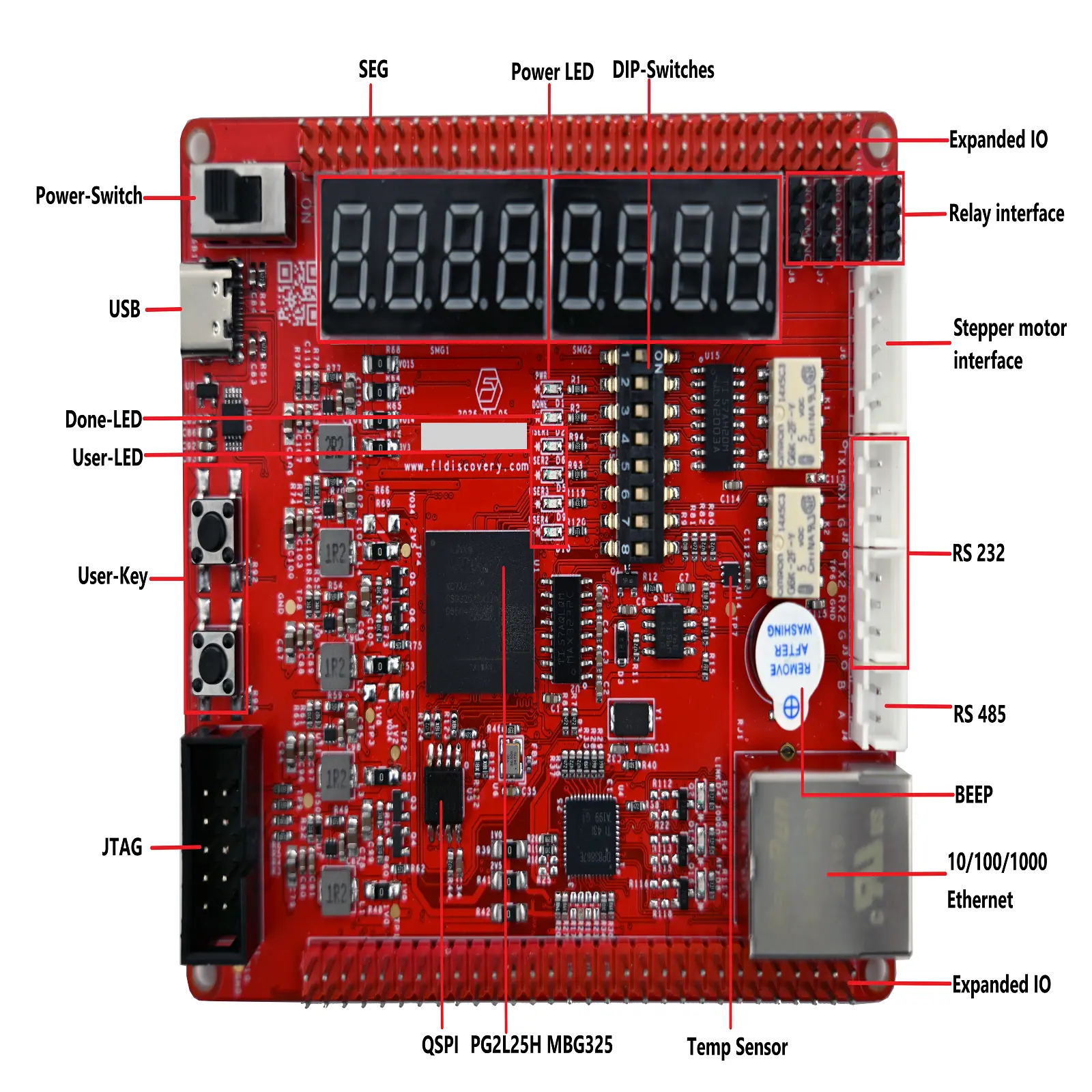
The ultra-high speed digital micromirror spatial light modulator is designed using Xilinx high-performance FPGA, which can maximize the advantages of DMD's fast turnover speed, and can meet the application requirements of maskless lithography, LDI, computer direct imaging, computational imaging, digital lithography, super-resolution microscopy, and other fields. The ultra high-speed digital micromirror spatial light modulator uses TI advanced optical control chips, designed for industrial and scientific research fields, supporting accurate internal and external synchronization signals, and being able to closely cooperate with cameras, motion platforms, etc.
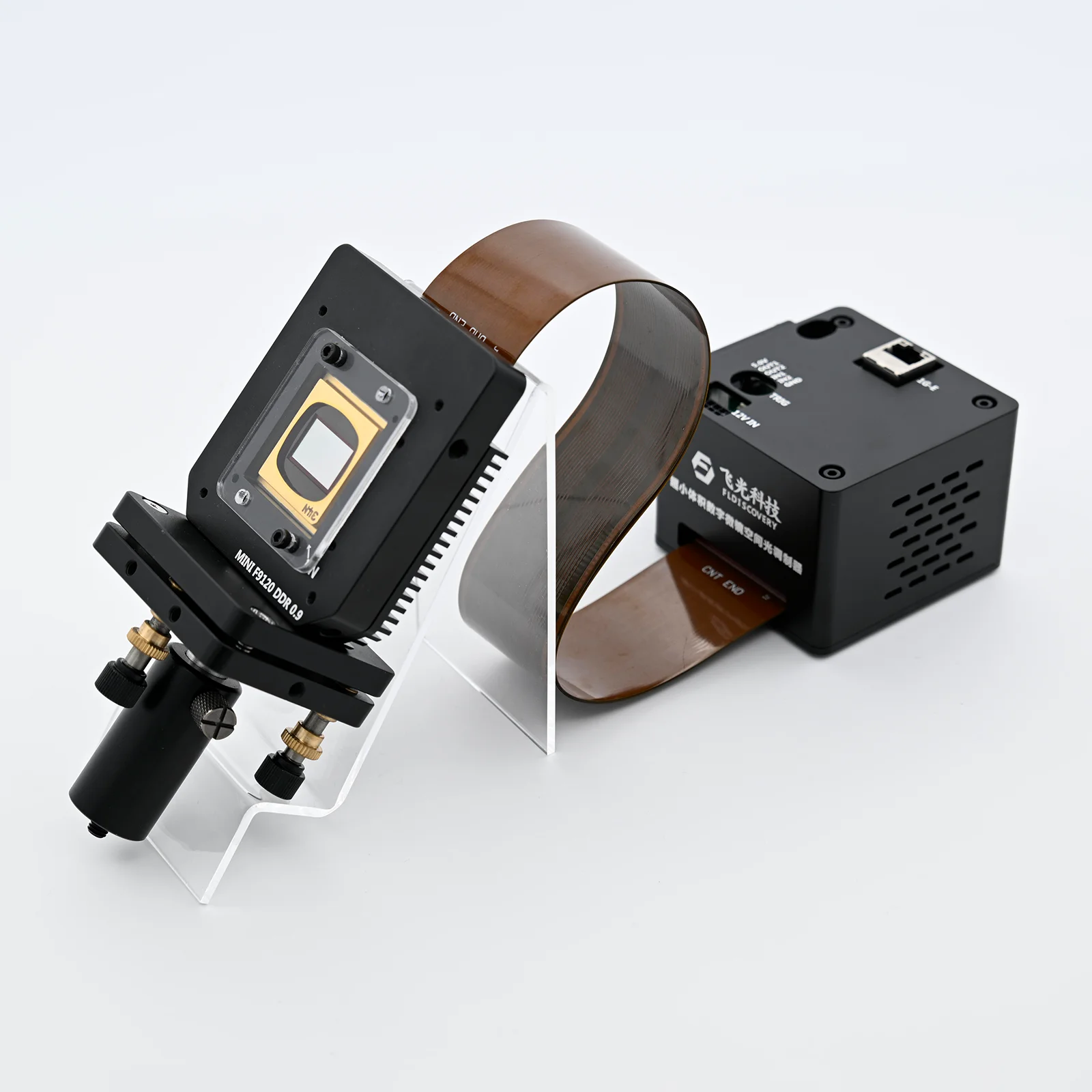
MINI-F9120-DDR-0.9-2

Ultra Compact Digital Micromirror Spatial Light Modulator

The ultra-compact digital micromirror spatial light modulator adopts a 4-layer stacked structure design. It is the smallest in size and fastest in speed among digital micromirror spatial light modulators in the industry, making it particularly suitable for application scenarios with strict requirements on device dimensions.This series of products is designed using Xilinx high-performance FPGA, which can maximize the advantages of DMD’s fast turnover speed, and can meet the application requirements of maskless lithography, LDI, computer direct imaging, computational imaging, digital lithography, super-resolution microscopy, and other fields. The ultra-compact digital micromirror spatial light modulator uses TI advanced optical control chips, designed for industrial and scientific research fields, supporting accurate internal and external synchronization signals, and being able to closely cooperate with cameras, motion platforms, etc.

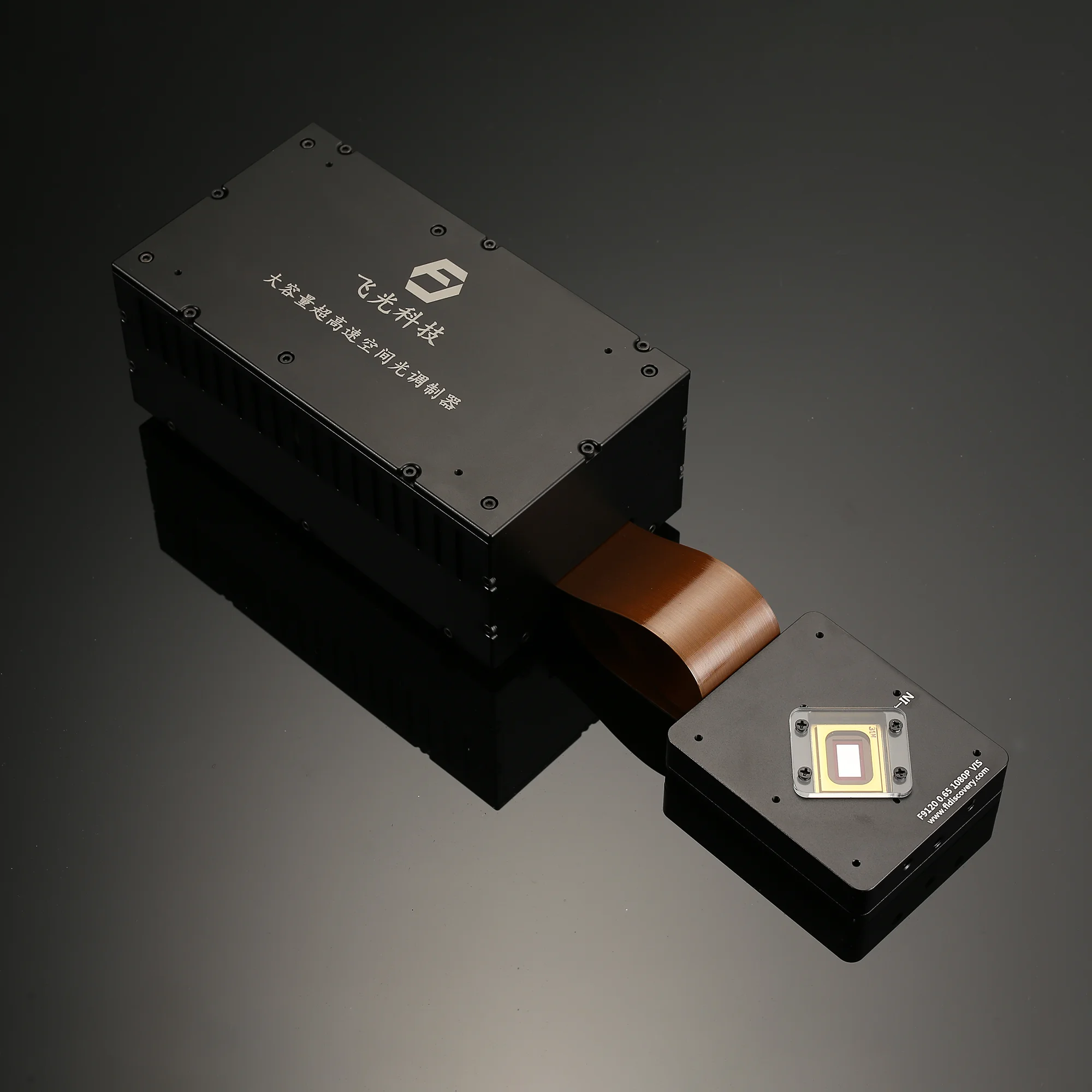
Ultra Large Capacity Digital Micromirror Spatial Light Modulator

The ultra large capacity digital micromirror spatial light modulator is designed using Xilinx high-performance FPGA and multiple parallel solid-state hard disks. It can store massive image data and maximize the advantages of DMD's fast flipping speed, which can meet the application requirements in fields such as maskless lithography, LDI, computer direct imaging, computational imaging, digital lithography, and high-resolution microscopy. The ultra large capacity digital micromirror spatial light modulator uses TI advanced optical control chips, designed for industrial and scientific research fields, supporting accurate internal and external synchronization signals, and being able to closely cooperate with cameras, motion platforms, etc.
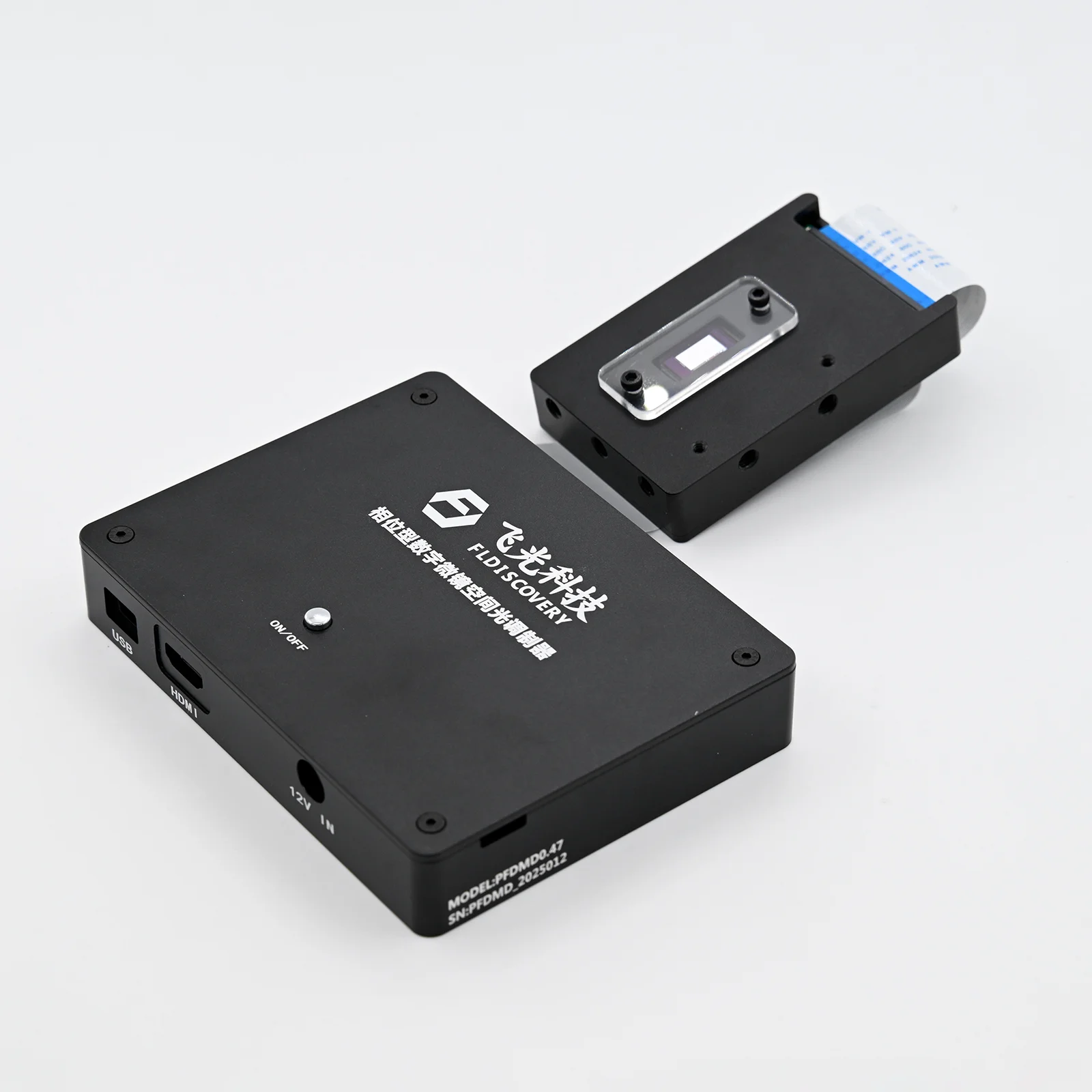
PLM047DV1-1

Phase-type Digital Micromirror Spatial Light Modulator

Traditional liquid crystal SLM has slow response and low speed, making it difficult to meet the requirements of high-speed and high-power application scenarios. Moreover, the market urgently needs a core component that can simultaneously achieve high-speed and high-power phase control. Our company has developed a phase-type digital micromirror spatial light modulator, which has achieved a technological leap from traditional amplitude modulation to high-speed and high-precision phase modulation of digital micromirror devices (DMD).
ls-2

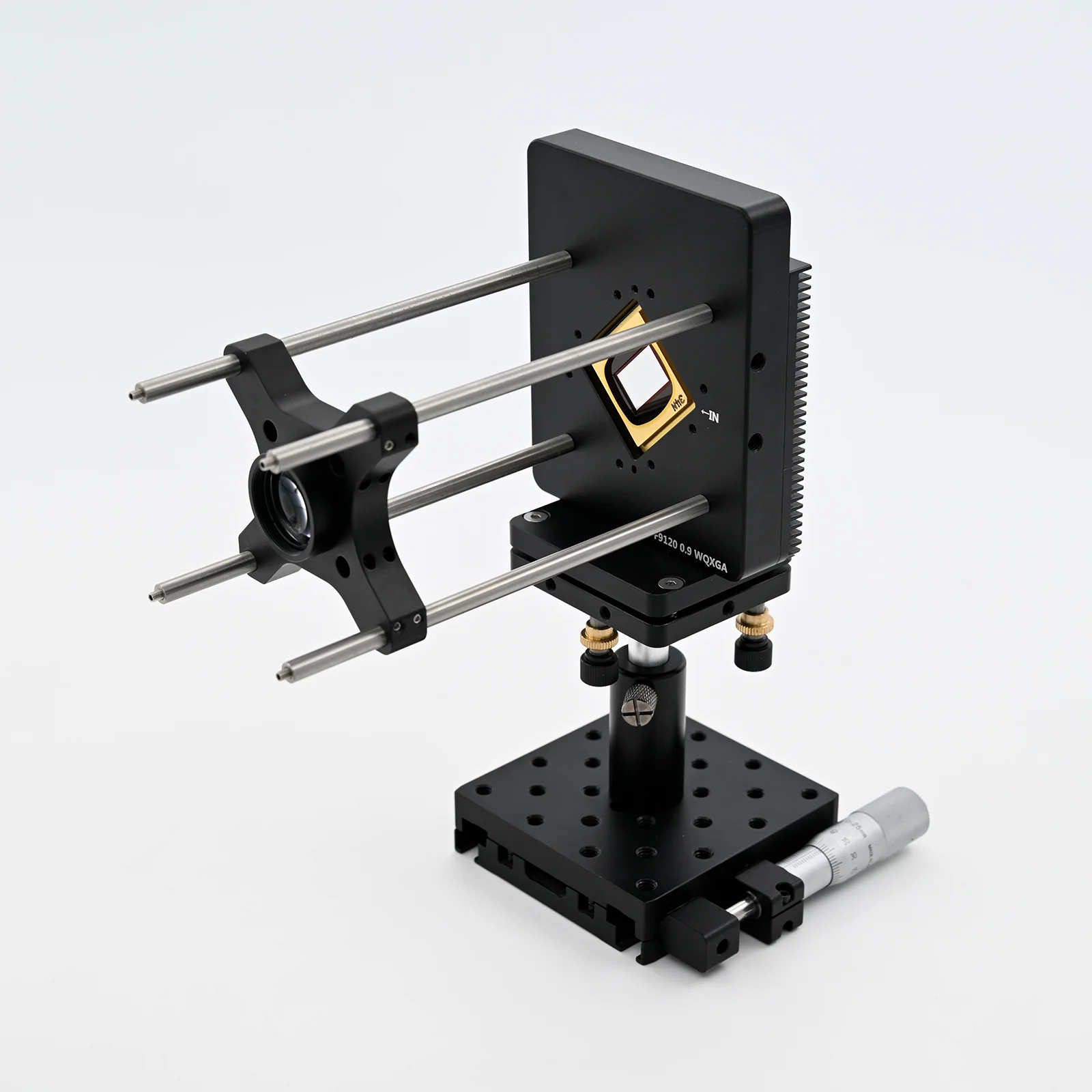
DMD Optical Path Auxiliary Component Series

Designed specifically to simplify the integration of DMD systems, it covers mirror components, precision displacement stages, rotation adjustment stages, TIR prism components, and cage structure interface modules. Compatible with all DMD devices from Fldiscovery, it supports quick installation, precise alignment, and stable operation, significantly lowering the threshold for optical path construction and facilitating the efficient implementation of scientific research and industrial applications.

Computer Experimental Imaging System

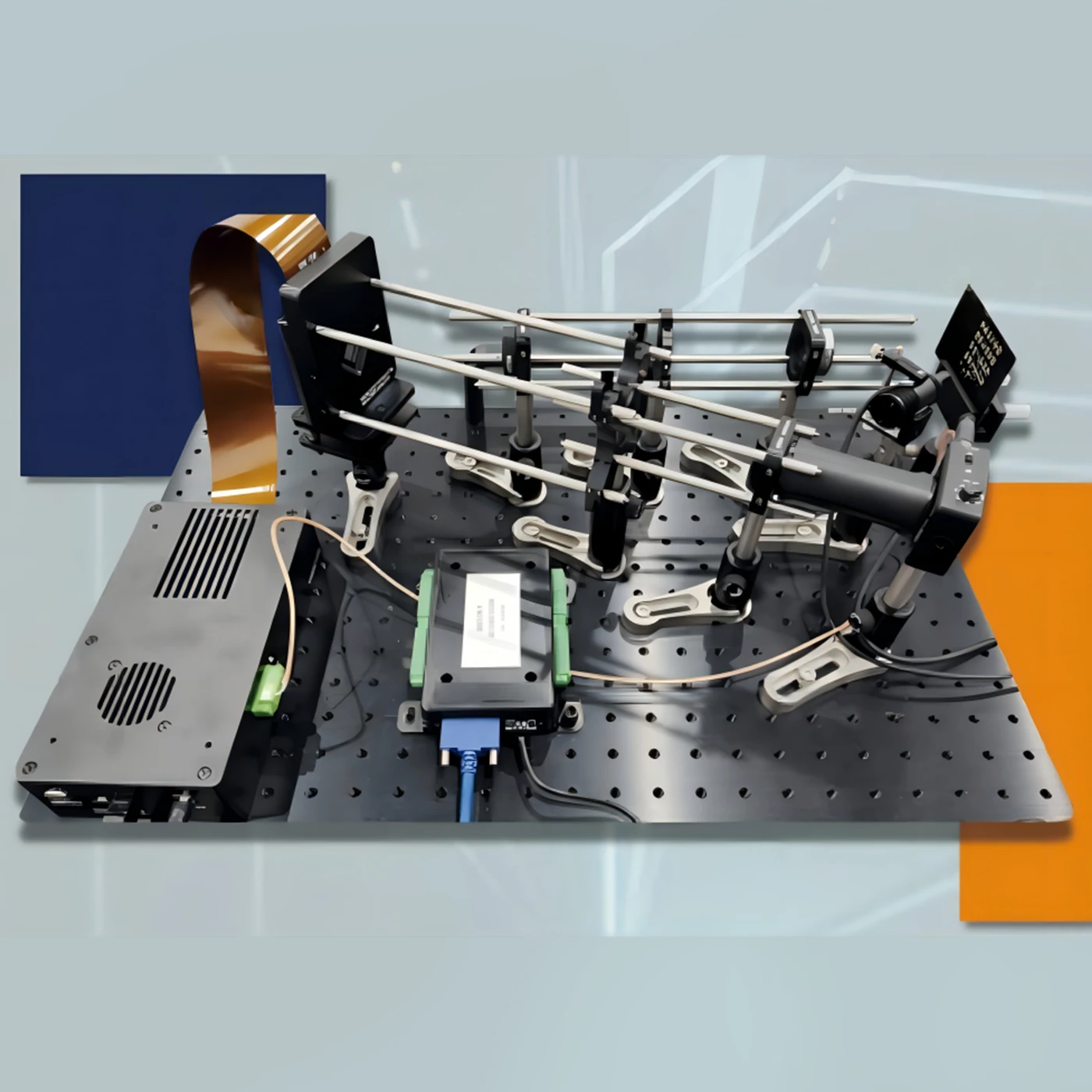
Computational imaging is a cutting-edge field that combines computational algorithms with intelligent optical design, capable of extracting more information from visual data than traditional imaging methods. The goal of this technology is to overcome the limitations of traditional 2D imaging, which may be limited by physical factors such as aberration, noise, and exposure time.