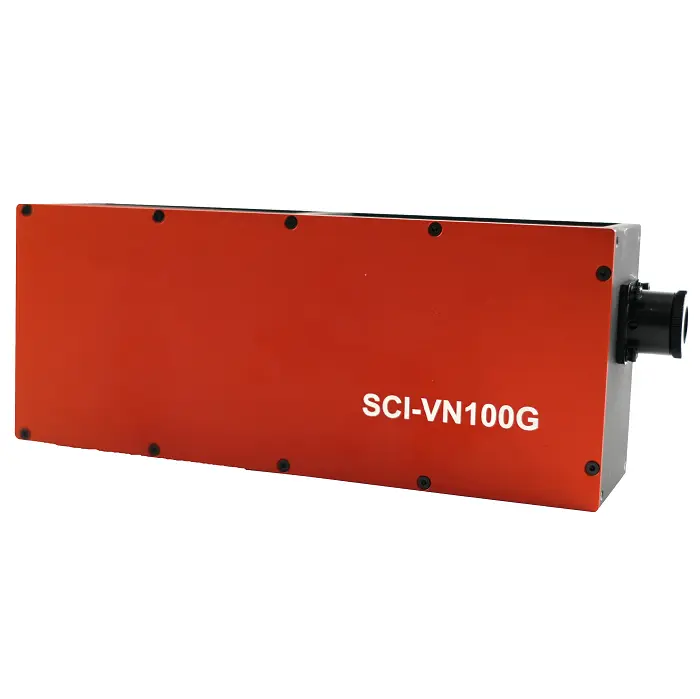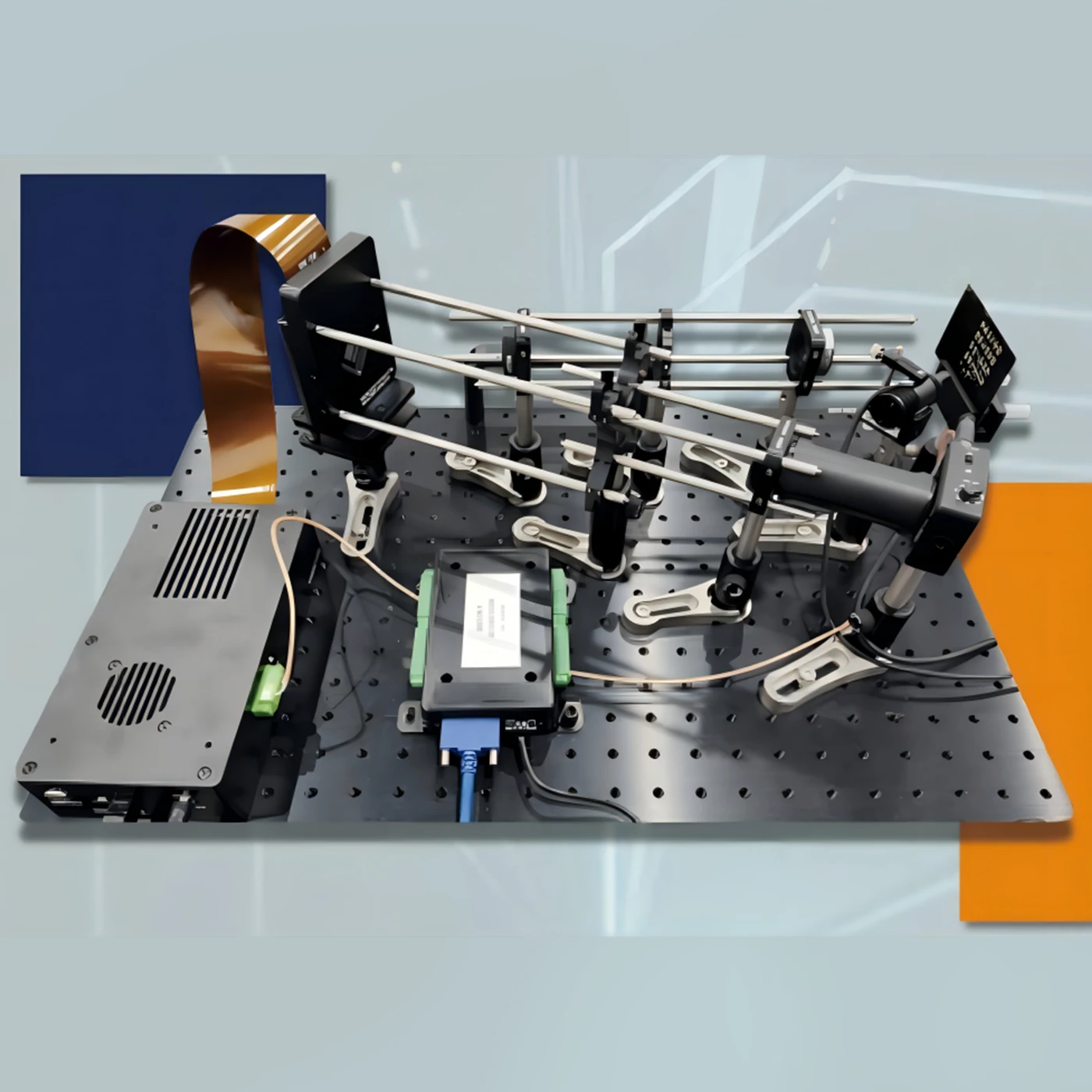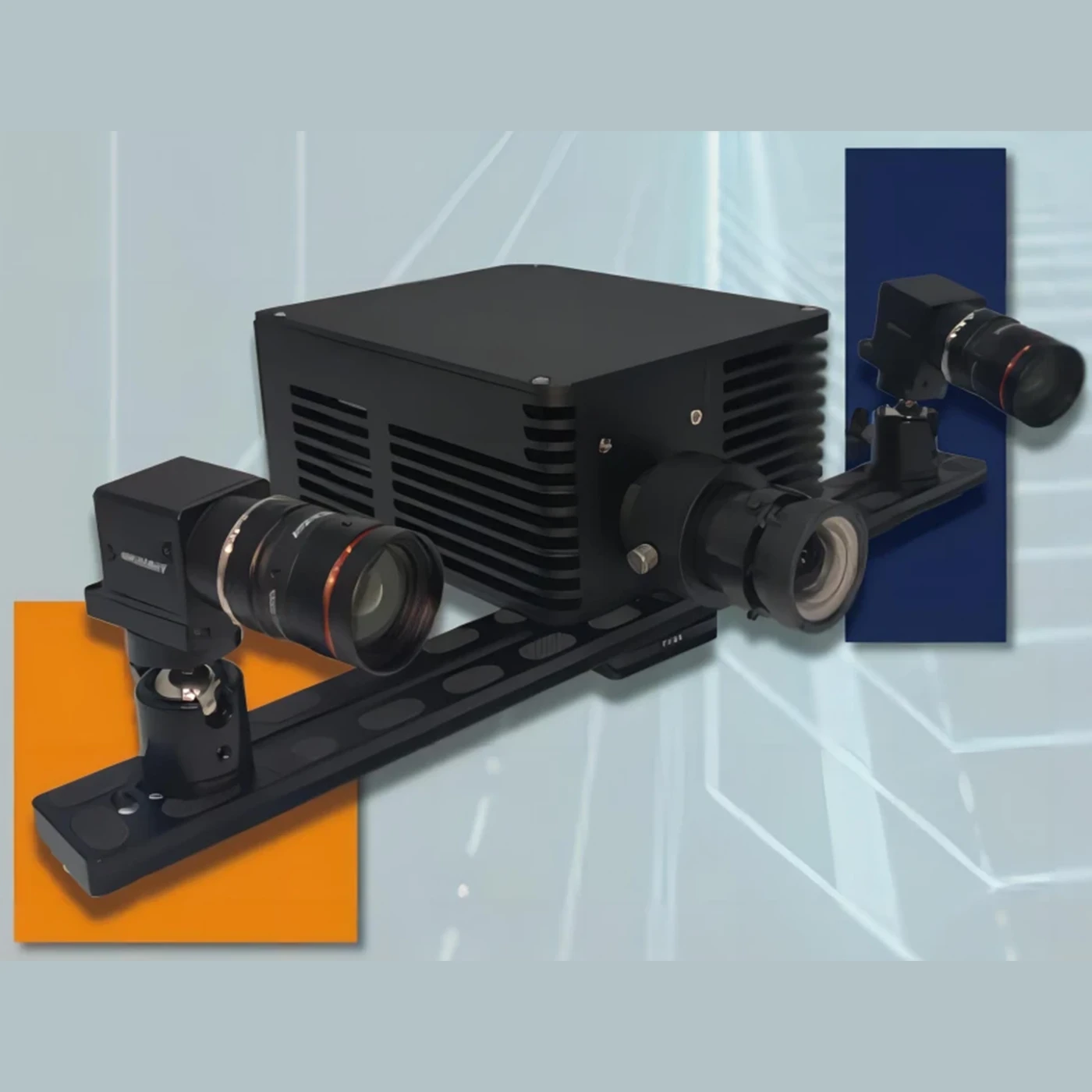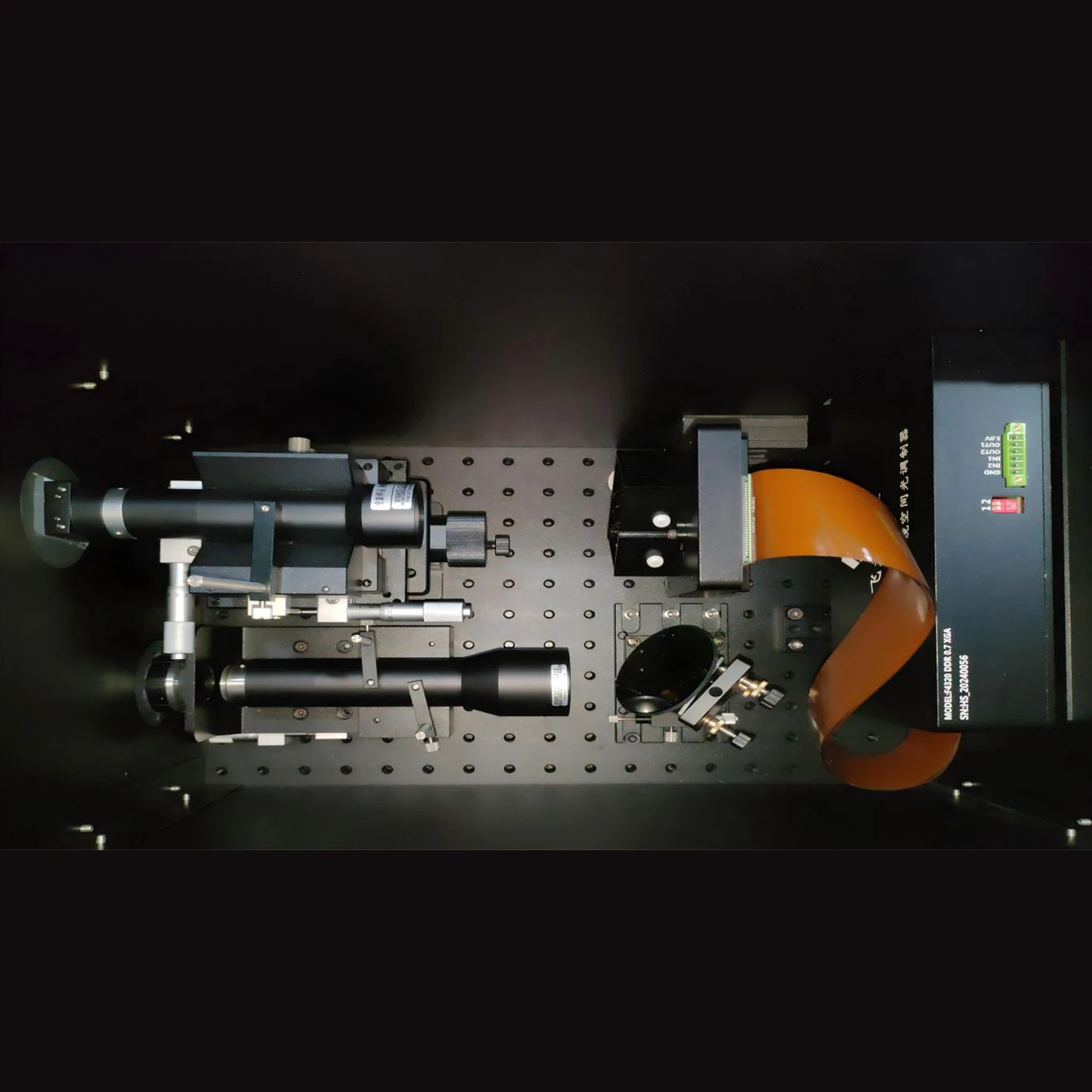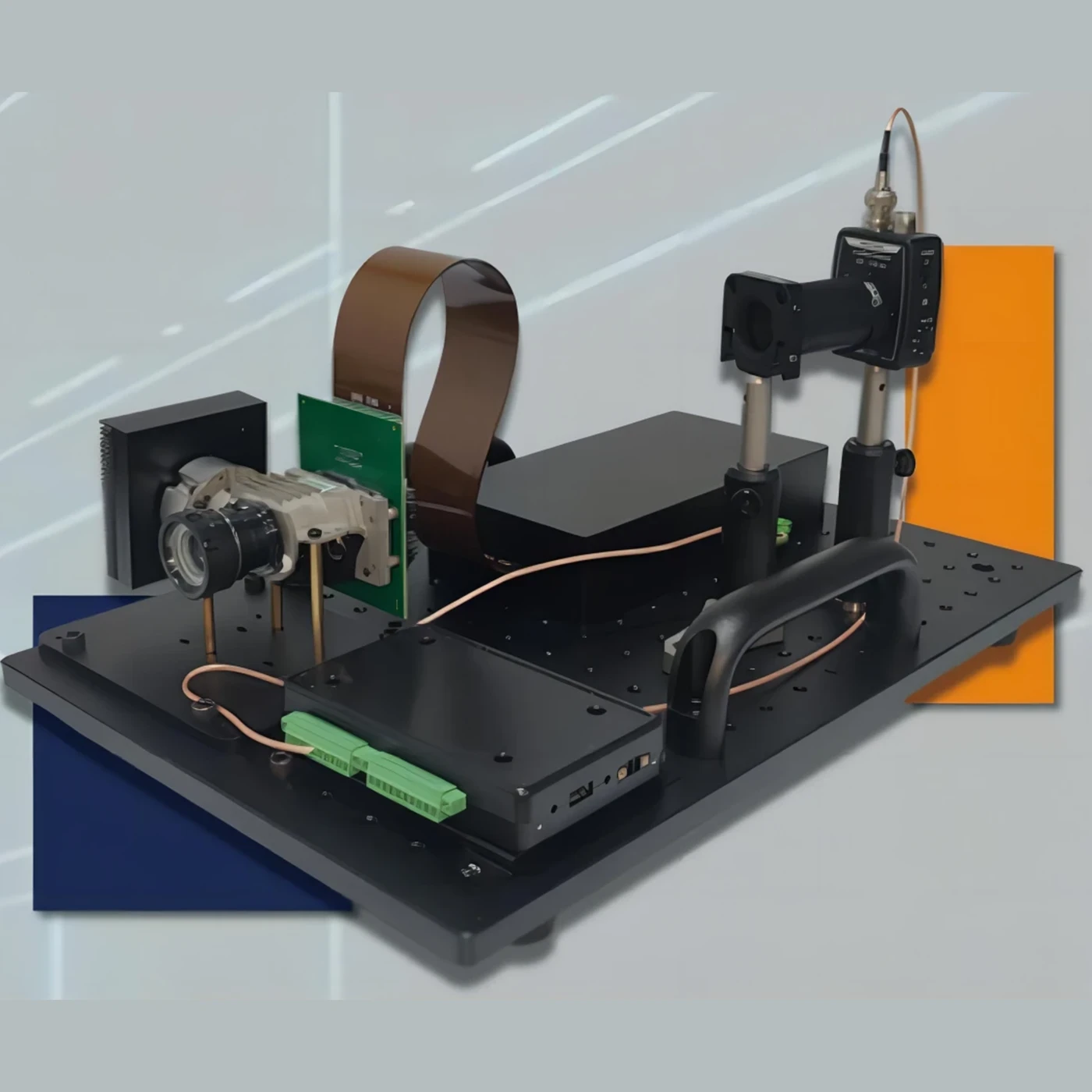

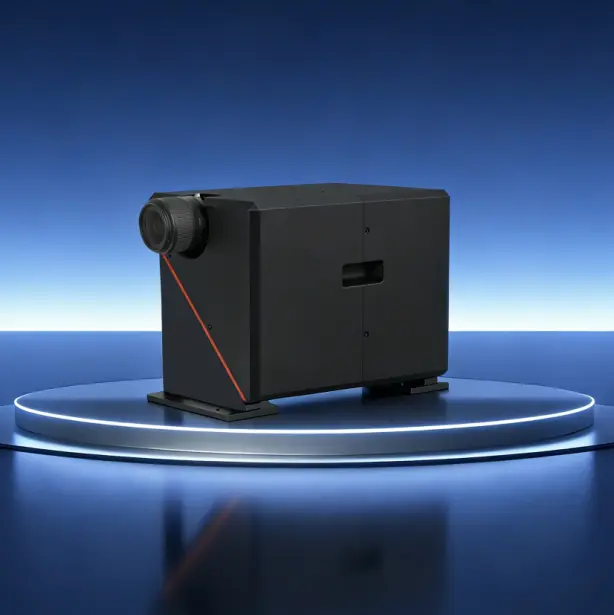
The FD-SCIC-10000 Video Snapshot Compressive Imaging High-Speed Camera is an innovative computational imaging product based on Video Snapshot Compressive Imaging (Video SCI) technology. This technology integrates coded aperture optical modulation with compressed sensing theory. By introducing a Digital Micromirror Device (DMD) in front of the sensor to modulate the incident light field, it encodes multiple high-speed video frames into a single exposure. A deep learning algorithm then reconstructs high-resolution high-speed video frames from this single “compressed” image.
Traditional high-speed cameras are limited by sensor readout speed. Achieving ultra-high frame rates often requires extremely high hardware costs and massive data bandwidth. Video SCI technology innovatively adopts a “physical compression + algorithmic decoding” imaging paradigm, offering a brand-new solution for observing high-speed transient processes.
The workflow:
Optical Encoding — DMD performs spatiotemporal encoding modulation on the incident light field using high-speed mask patterns
Compressed Acquisition — The encoded optical signal is captured by a high-sensitivity sensor, with the complete temporal dynamic information contained within a single static 2D image
Algorithmic Reconstruction — Deep learning-based reconstruction algorithms recover high-speed video frame sequences from the single-exposure measurement
1. Ultra-High Frame Rate
Through compressive encoding, Video SCI captures a single frame at the sensor’s standard frame rate yet reconstructs high-speed video far exceeding the sensor’s native rate. Full-frame rate up to 10,000 fps.
2. High-Resolution Image Quality
End-to-end joint optimization of encoding and decoding algorithms enhances reconstruction accuracy, signal-to-noise ratio, and detail preservation without sacrificing high resolution, effectively reducing artifacts and noise.
3. Flexible and Scalable
Compression ratio and reconstruction frame rate can be flexibly adjusted based on requirements. By varying the movement speed or pattern of the encoding mask, different temporal compression ratios can be achieved — suitable for both scientific research requiring extremely high frame rates and industrial inspection of medium-speed processes.
4. Low Cost, Low Bandwidth
Achieves high-speed imaging capability with conventional hardware, eliminating the need for expensive high-speed sensors and dedicated image acquisition cards, significantly reducing system cost and data bandwidth requirements.
| Parameter | Specification |
| Model | FD-SCIC-10000 |
| Sensor Type | CMOS |
| Max Resolution | 1600 × 1100 |
| Pixel Size | 9.0 μm × 9.0 μm |
| Full-Frame Rate | 10,000 fps |
| Electronic Shutter | Global Shutter |
| Auto Exposure | Auto Gain Control |
| Dynamic Range | Supported |
| Data Interface | 10G Ethernet |
| Power Supply | DC 12 V, 5 A |
| Power Consumption | 60 W |
| Recording Time | Unlimited |
| Lens Focal Length | 35 mm (customizable) |
| Lens Mount | EF mount (standard) |
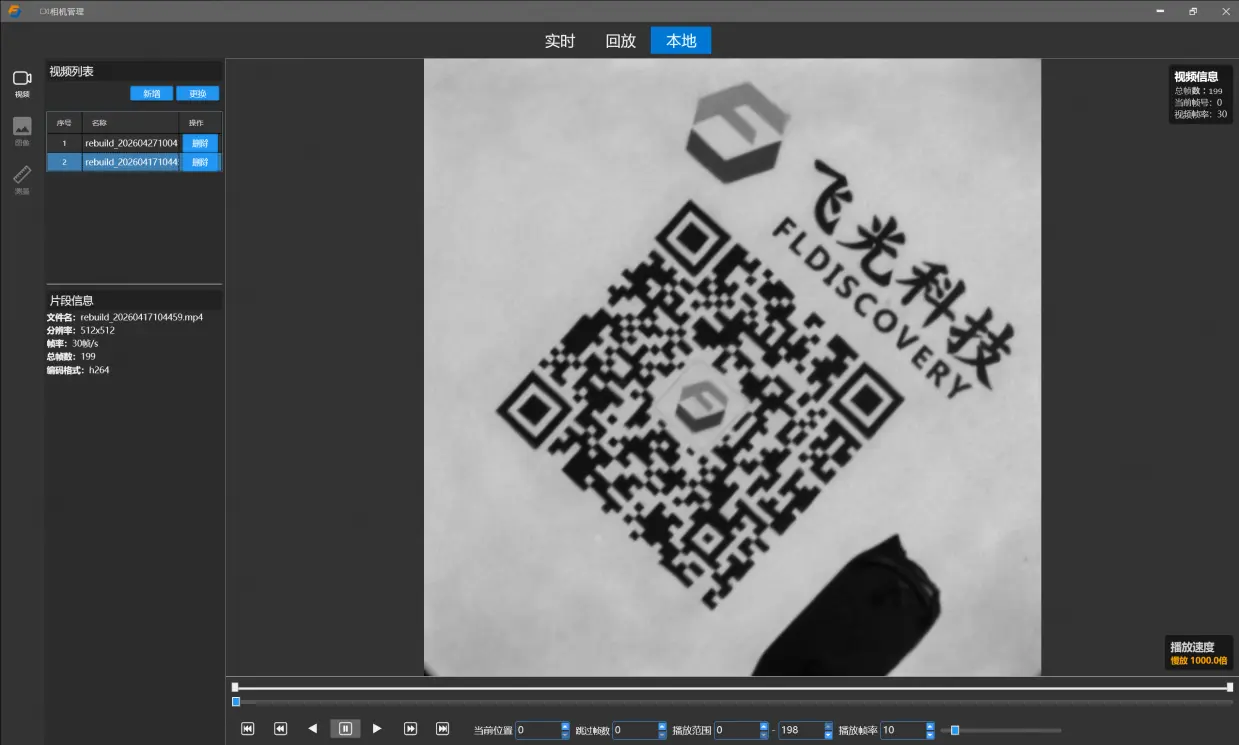
Key Software Modules:
Camera Management — search, connect, disconnect camera
Real-Time Acquisition — preview, calibration, continuous capture, and snapshot
Playback & Reconstruction — select video segments for deep learning-based reconstruction
Local Results Viewer — frame-by-frame slow-motion analysis of reconstructed videos
| Component | Recommended Specification |
| CPU | 13th Gen Intel Core i9-13980HX (2.20 GHz) or higher |
| Memory | 64 GB (including virtual memory) |
| Storage | >500 GB |
| GPU | NVIDIA GeForce RTX 4090 Laptop GPU or higher |
Drop Testing — capture deformation and impact dynamics during product drops
Welding Research — observe weld pool dynamics, spatter trajectories, and heat-affected zone evolution
Explosion Mechanics — record shock wave propagation and material response
Automotive Crash Testing — analyze structural deformation and energy absorption during collisions
Fluid Dynamics — study high-speed droplets, jets, and turbulent flow phenomena