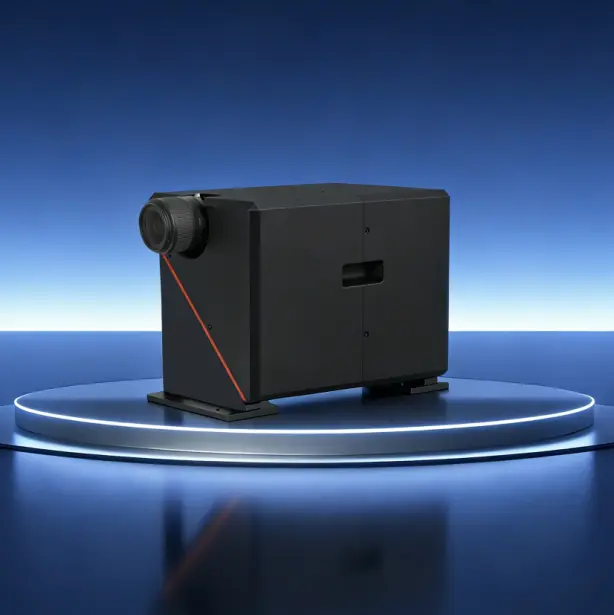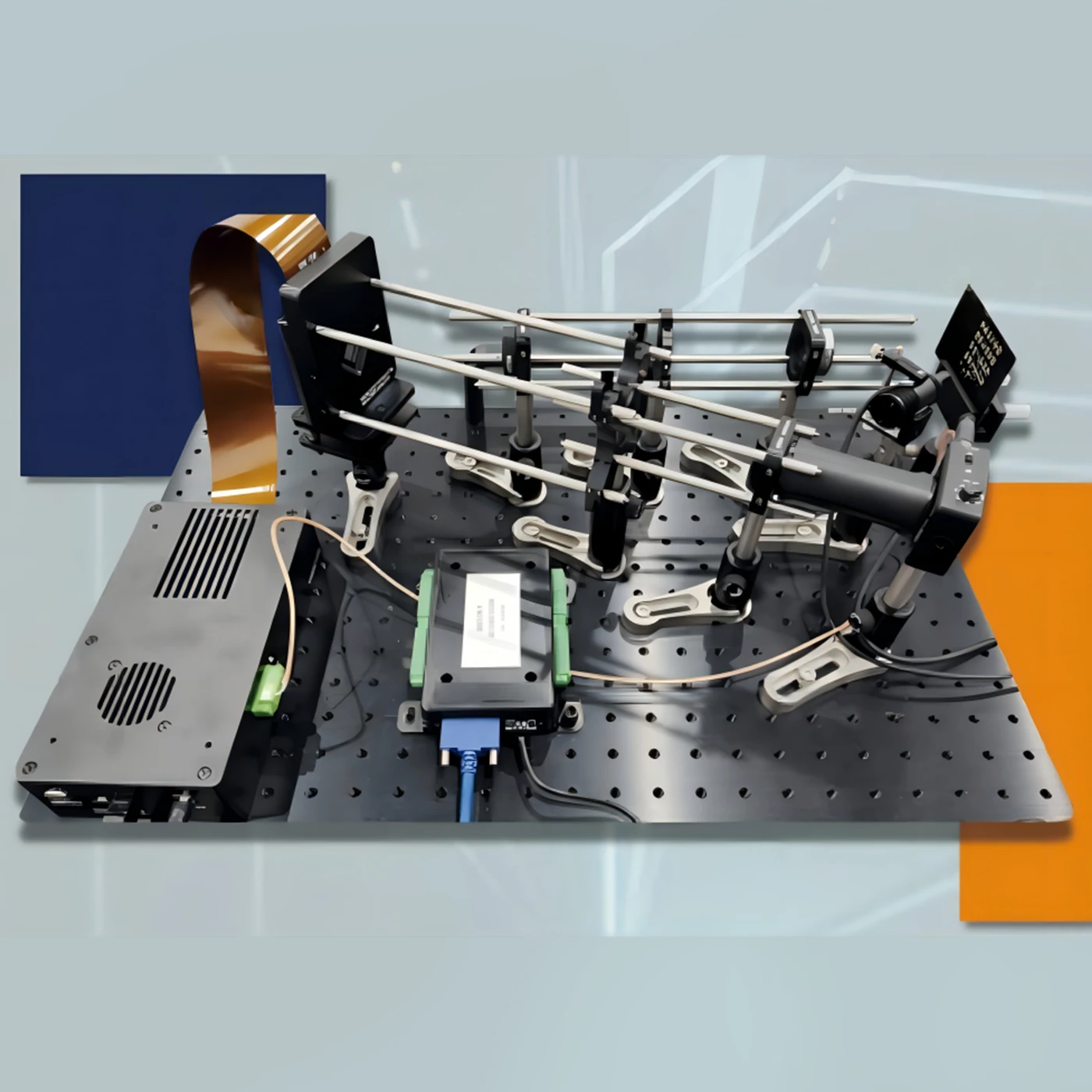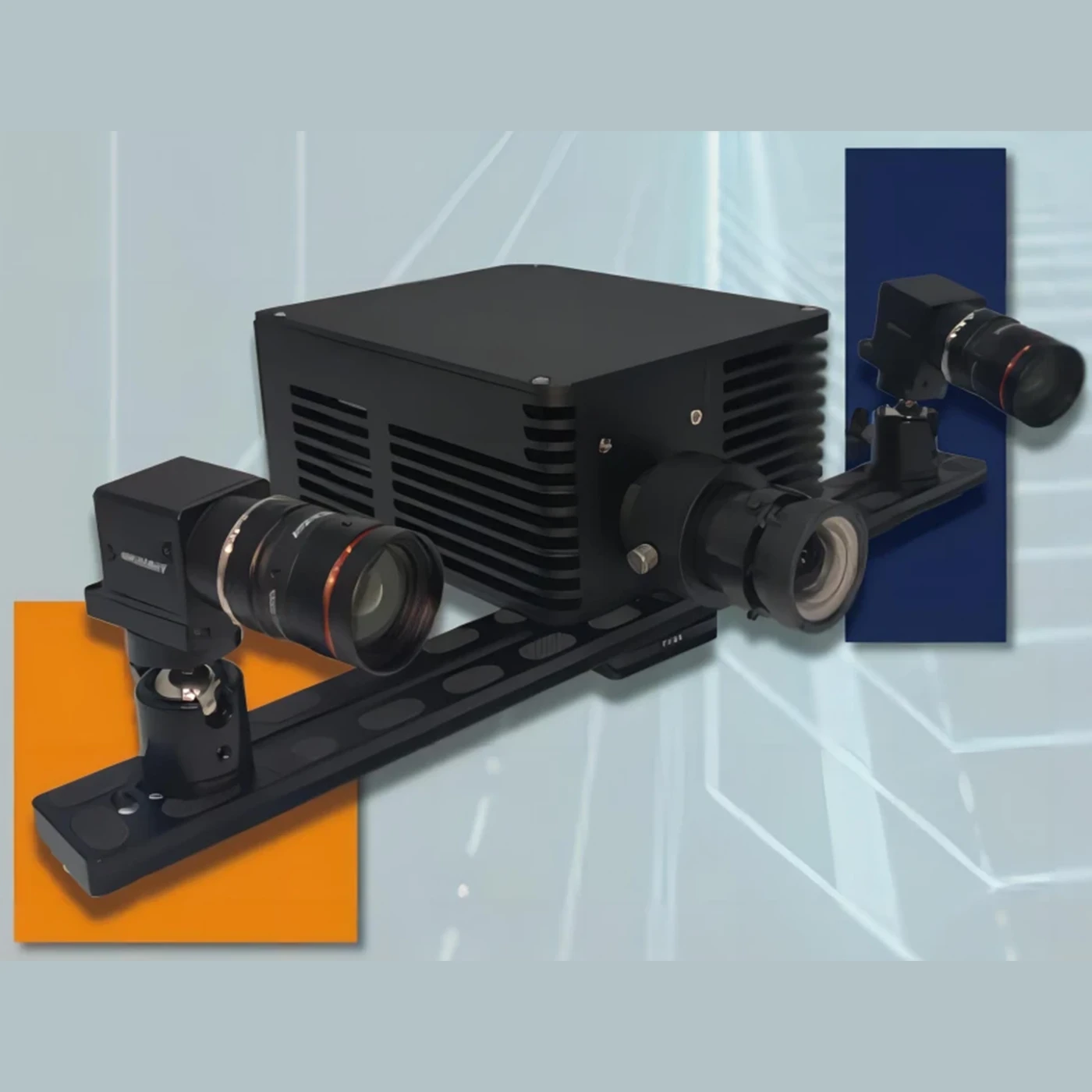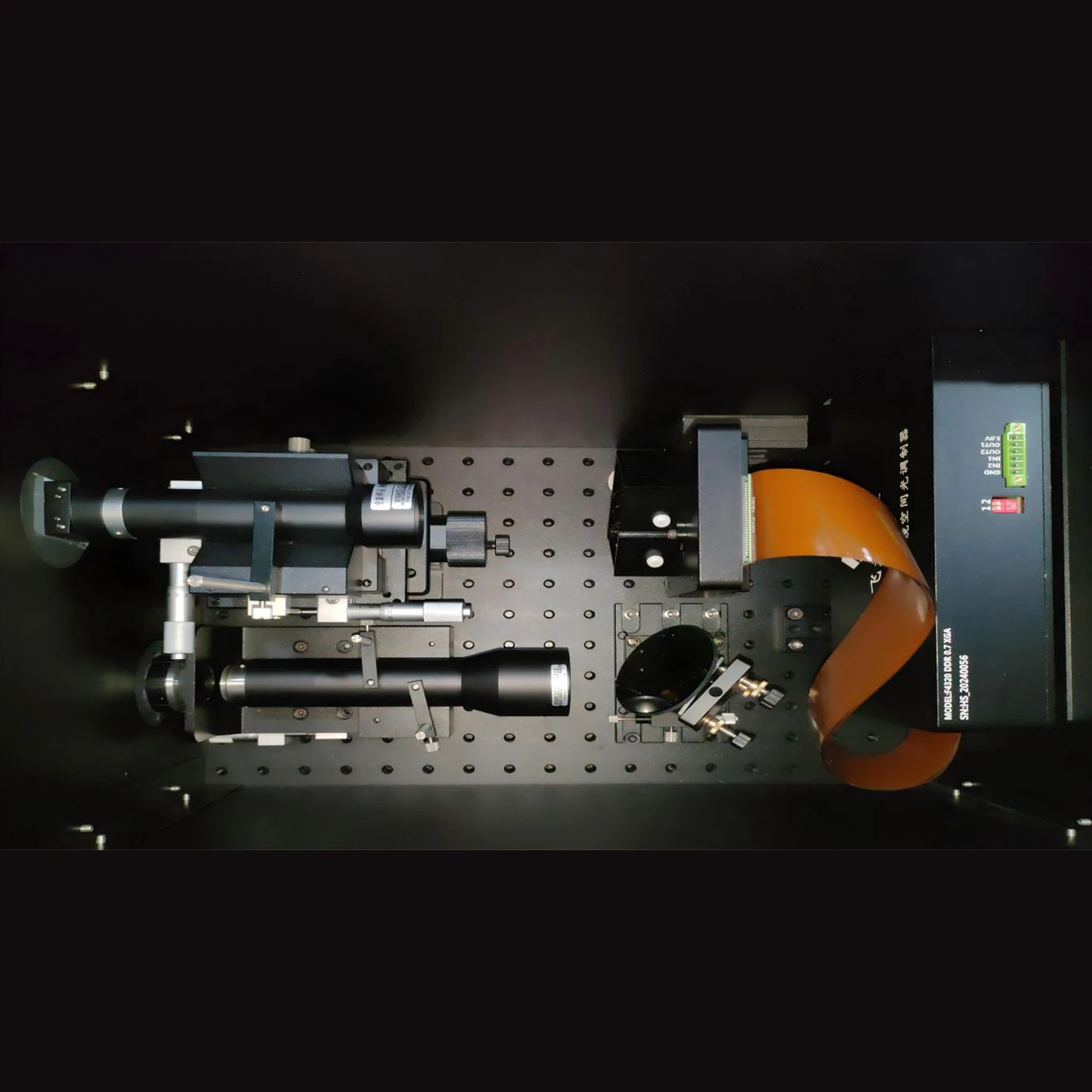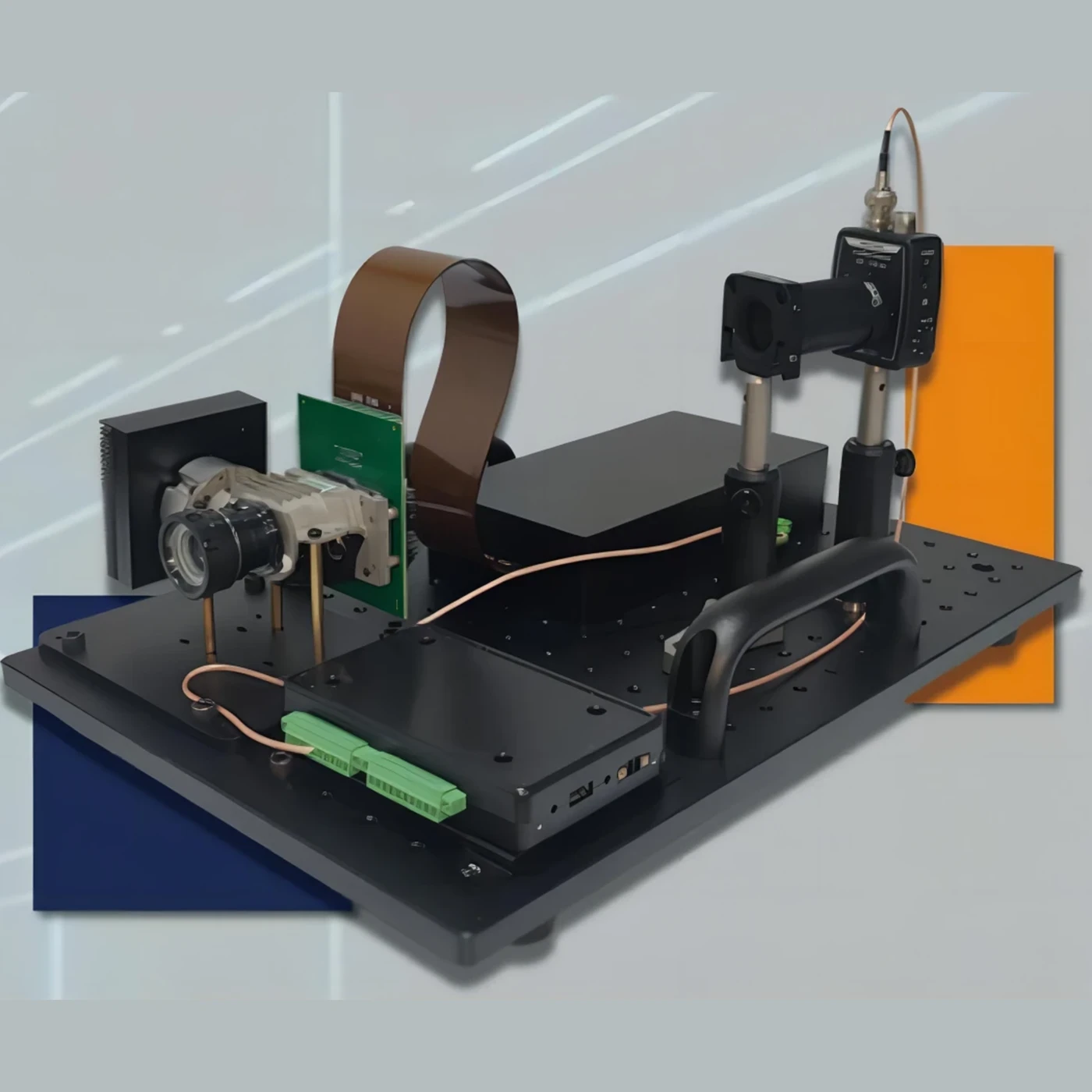

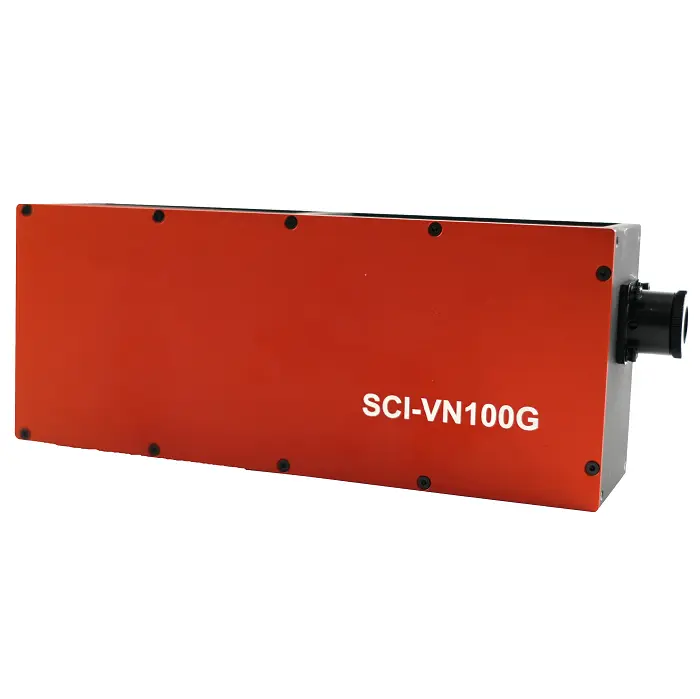
The FD-HSC-VNIR Visible-NIR Single-Exposure Hyperspectral Camera is a high-performance spectral imaging device integrating artificial intelligence and computational imaging technology. By incorporating encoding and dispersive components into the optical system, it enables compressive acquisition of hyperspectral images, followed by high-precision reconstruction using proprietary AI algorithms.
This product eliminates the slow acquisition speed and operational complexity associated with traditional push-broom hyperspectral cameras that require external or built-in scanning mechanisms. It achieves millisecond-level single-exposure spectral image acquisition, delivering high spectral resolution, high spatial resolution, and high-confidence spectral data.
Traditional hyperspectral cameras require push-broom scanning mechanisms to capture images line by line, resulting in slow acquisition speeds and difficulty in dynamic scene applications. The FD-HSC-VNIR employs snapshot (single-exposure) compressive imaging technology, incorporating encoding and dispersive components into the optical system to compress hyperspectral data into a single exposure, followed by AI-based high-precision spectral reconstruction — achieving rapid acquisition and real-time reconstruction of hyperspectral images.
- High-Speed Single-Exposure Imaging
Snapshot (single-exposure) imaging at 25 fps@1024×1024×100 (equivalent to traditional push-broom at 25×1024 fps), with spectral range of 400-1000 nm. Complete hyperspectral data cube acquired in milliseconds. - Moving Target Compatible
All spectral bands acquired simultaneously, eliminating image misalignment caused by target movement during data acquisition — enabling precise spectral imaging and real-time monitoring in dynamic scenes. - High Spectral Resolution
≥100 spectral channels, spectral resolution up to 3nm, hyperspectral image resolution of 1024×1024 — balancing spectral fidelity and spatial clarity. - Compact Design
Lightweight at 950g, compact dimensions of 214×80×53mm — fits various workstations and space-constrained environments. - Low Power, Easy Deployment
USB 3.0 Type-C powered, 5V operating voltage, power consumption <5W — plug-and-play, no external power supply required.
| Parameter | Specification |
| Model | FD-HSC-VNIR |
| Acquisition Mode | Snapshot (single-exposure) compressive imaging |
| Spectral Range | 400-1000 nm (400-700 nm customizable) |
| Spectral Channels | ≥100 |
| Spectral Resolution | Up to 3 nm |
| Hyperspectral Image Resolution | 1024 × 1024 |
| Imaging Speed | 25 fps@1024×1024×100 (equiv. to 25×1024 fps push-broom) |
| Field of View | 35° (8mm lens) / 40° (7mm lens) |
| Pixel Size | 3.45 μm |
| Lens Focal Length | 8 mm / 7 mm (optional) |
| Detector | CMOS |
| Data Interface | USB 3.0 Type-C |
| Operating Voltage | 5V |
| Power Consumption | <5W |
| Dimensions | 214×80×53 mm (L×W×H) |
| Weight | 950 g |
| Model | Description |
| FD-HSC-VNIR | Standard version, 400-1000nm spectral range |
| FD-HSC-VNIR-PRO | Enhanced version with custom optical components and advanced analysis modules |
| FD-HSC-VIS | Visible-light customized version, 400-700nm spectral range |
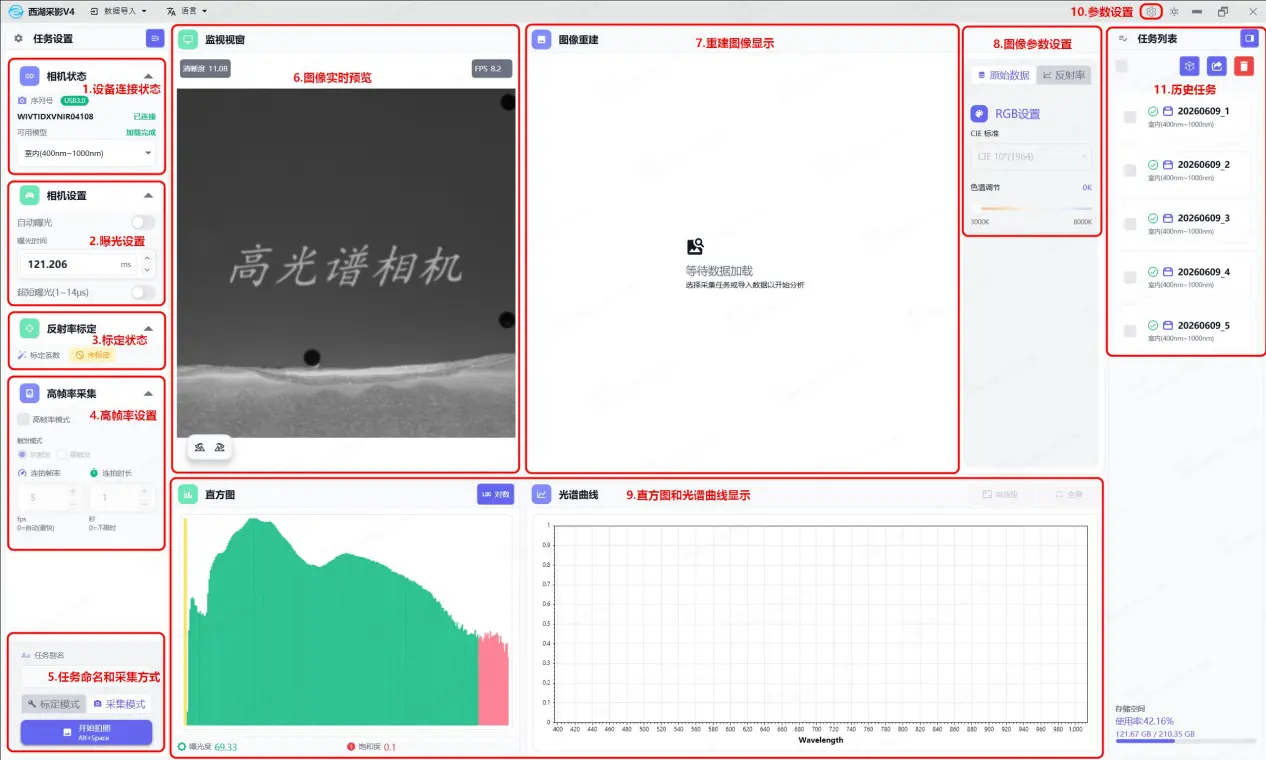
Software Main Interface Modules:
1. Device Connection & Status Management:Camera connection status display;Model selection and loading (~10 seconds loading time);Automatic device serial number recognition
2. Exposure Control:Auto exposure (automatically adjusts exposure time based on target brightness);Manual exposure time setting (in ms);Ultra-short exposure mode (1-14 μs)
3. Calibration System:Reflectance calibration (Point calibration / Area calibration);Real-time calibration status display;Supports 50% reflectance standard whiteboard calibration
4. Acquisition Modes:①Single capture: Single acquisition and reconstruction;②High-frame-rate continuous capture:Soft trigger: up to 50 FPS (12-bit pixel depth),Hard trigger: up to 100 FPS (8-bit pixel depth, hardware support required)
5. Reconstruction & Display:Real-time hyperspectral data cube reconstruction;Pseudo-color RGB image display;Multi-spectral channel view;Real-time spectral curve extraction and display
6. Data Analysis Tools:Reflectance data viewing;Index analysis (8 selectable indices);Color analysis (sRGB, CIE L*a*b* color spaces);CIE standard options (1931 2° / 1964 10°);Standard illuminant options (D50/D55/D65/D75)
7. Data Management:Task list management (named by time or sequence number);Single/batch export (ENVI/HDF5 formats);Single/batch deletion;ZIP file / folder import;Spectral curve data export (including images)
| Component | Recommended Specification |
| OS | Windows 10 / 11 (64-bit) |
| CPU | Intel Core i5 / AMD Ryzen 5 or higher (i7/Ryzen 7 recommended) |
| RAM | 8 GB or more (16 GB recommended) |
| Storage | ≥256 GB (SSD recommended) |
| USB Interface | Type-C to USB 3.0 |
| GPU | NVIDIA RTX 30 series or higher with CUDA support |
FD-HSC-VNIR Hyperspectral Camera × 1 Type-C Data Cable × 1
50% Reflectance Standard Whiteboard × 1 Quick Start Guide (Electronic Version) × 1
Semiconductor Wafer Inspection — rapid defect detection and film uniformity analysis
Print Quality Inspection — precise color deviation and print quality identification
Textile Inspection — color difference analysis, dye composition identification
Pharmaceutical Ingredient Analysis — non-destructive spectral component detection
Skin Analysis — skin condition assessment and pigmentation analysis
Art Authentication & Conservation — pigment composition analysis and authenticity verification
Tobacco Contaminant Detection — rapid identification of foreign materials and impurities
Wood Mold Detection — early mold identification through spectral recognition
Tea Quality Inspection — tea grading and composition analysis